


Thai Yoga Massage – Freeing the Winds
From Circulation to Subtle Movement
Introduction
Movement is an expression of life. It is present in the flowing of blood and other bodily fluids, in the contraction and relaxation of our muscles, in every breath we take, and in the subtle activity of our nervous system. Some movements are clearly visible, while others unfold quietly beneath the surface, yet all are part of the continuous dance of life within us.
In traditional Thai healing philosophy, this movement is closely connected to the concept of Lom, or wind. The free flow of wind is considered essential for health and well-being. When the winds become restricted or stagnant, pain, tension, and discomfort may arise. Freeing the winds is therefore not simply about creating movement, but about inviting the body to rediscover its natural flow and harmony.
This understanding finds an interesting resonance in osteopathic philosophy. Andrew Taylor Still, the founder of osteopathy, emphasized the importance of circulation with his famous words: “The rule of the artery is supreme.” Both traditions, each in their own way, invite us to recognize the importance of movement and flow within the living body.
In this two-day workshop, we will explore different ways of freeing the winds through traditional Thai Massage techniques, enriched by osteopathic perspectives on the interconnectedness of the body.
Alongside palming, stretching, and mobilization, we will give particular attention to techniques that address circulation and fluid movement. This includes traditional Thai Massage blood stops, which we will approach with an understanding of their physiological effects, appropriate application, and safety considerations.
Beyond these more tangible aspects of movement, we will also explore the subtler winds associated with the nervous system. Through attentive touch, gentle movement, and stillness, we will investigate how different qualities of contact may influence relaxation, body awareness, and the experience of nervous system regulation.
Rather than treating these aspects separately, we will explore how they relate to one another and how they can be integrated into a coherent, sensitive, and responsive treatment.
What we will explore
- The traditional Thai concept of Lom (wind) and its relationship to movement within the body
- Osteopathic perspectives on circulation, fluid dynamics, and the body’s interconnectedness
- Traditional Thai Massage techniques including palming, stretching, and mobilization
- Blood stops: traditional application, physiological considerations, contraindications, and safe practice
- Approaches to working with the body’s fluid systems through touch and movement
- The subtler winds: exploring the relationship between touch, breathing, and nervous system activity
- Different qualities of touch, from more direct physical techniques to gentle listening and stillness
- Integrating these approaches into a fluid and individualized treatment
Learning through experience
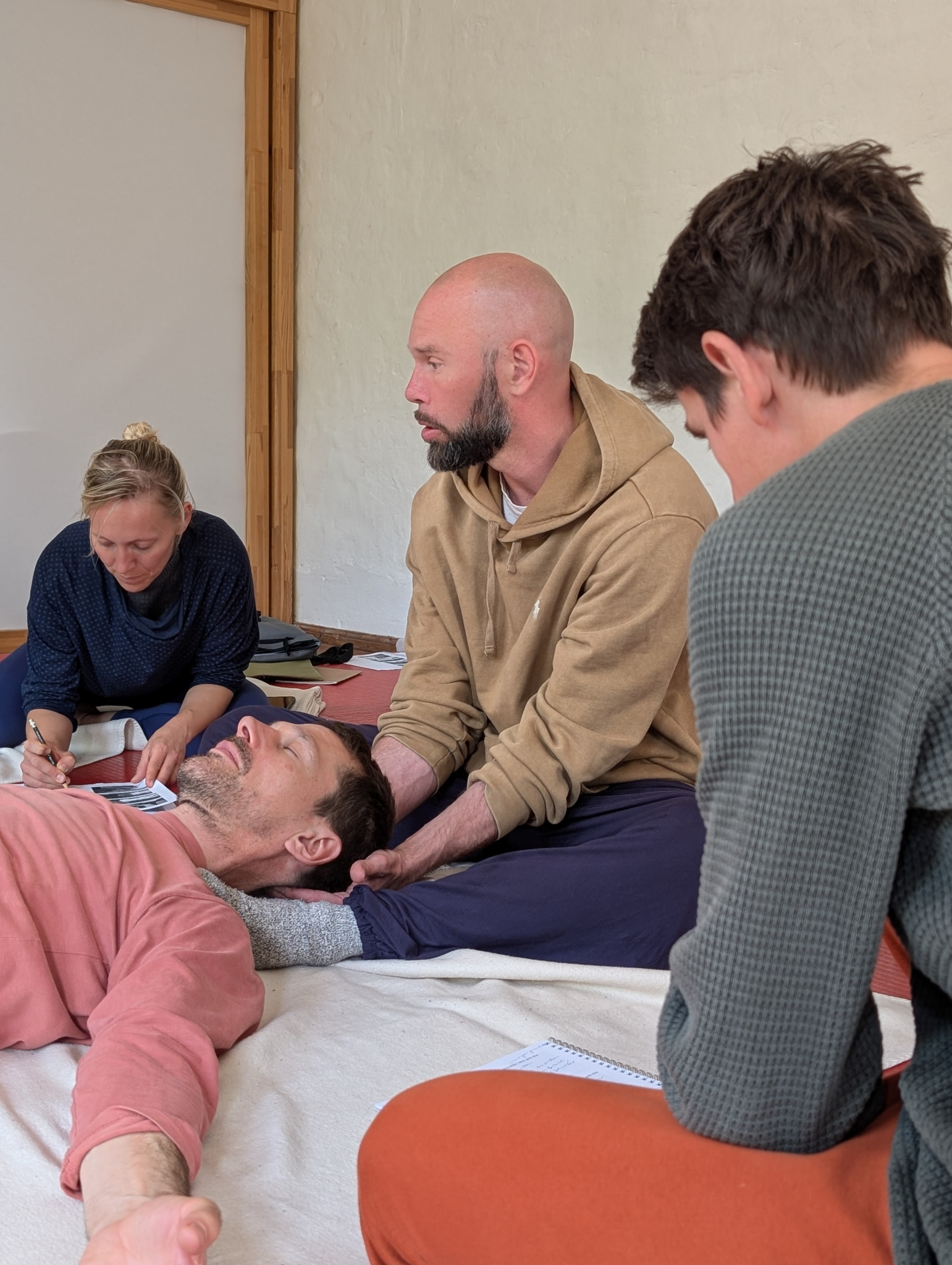
The workshop combines demonstrations, hands-on practice, anatomical insights, and time for exploration and exchange.
We will investigate how different techniques and qualities of touch influence our perception of movement, fluidity, and relaxation, developing a deeper sensitivity to the body’s responses.
The intention is not simply to add new techniques to our repertoire, but to broaden our understanding of movement within the body and how we can work with it.
Who can participate?
This workshop is intended for people with previous experience in Thai Massage or other forms of bodywork. Familiarity with working on a floor mat is helpful.
Fees & Registration
Course fee: 195 €
Deposit: 50 €
The remaining fee may be transferred before the course or paid in cash on the first day (preferred).
Registration & cancellation conditions →